The Fruit Island of the Maldives
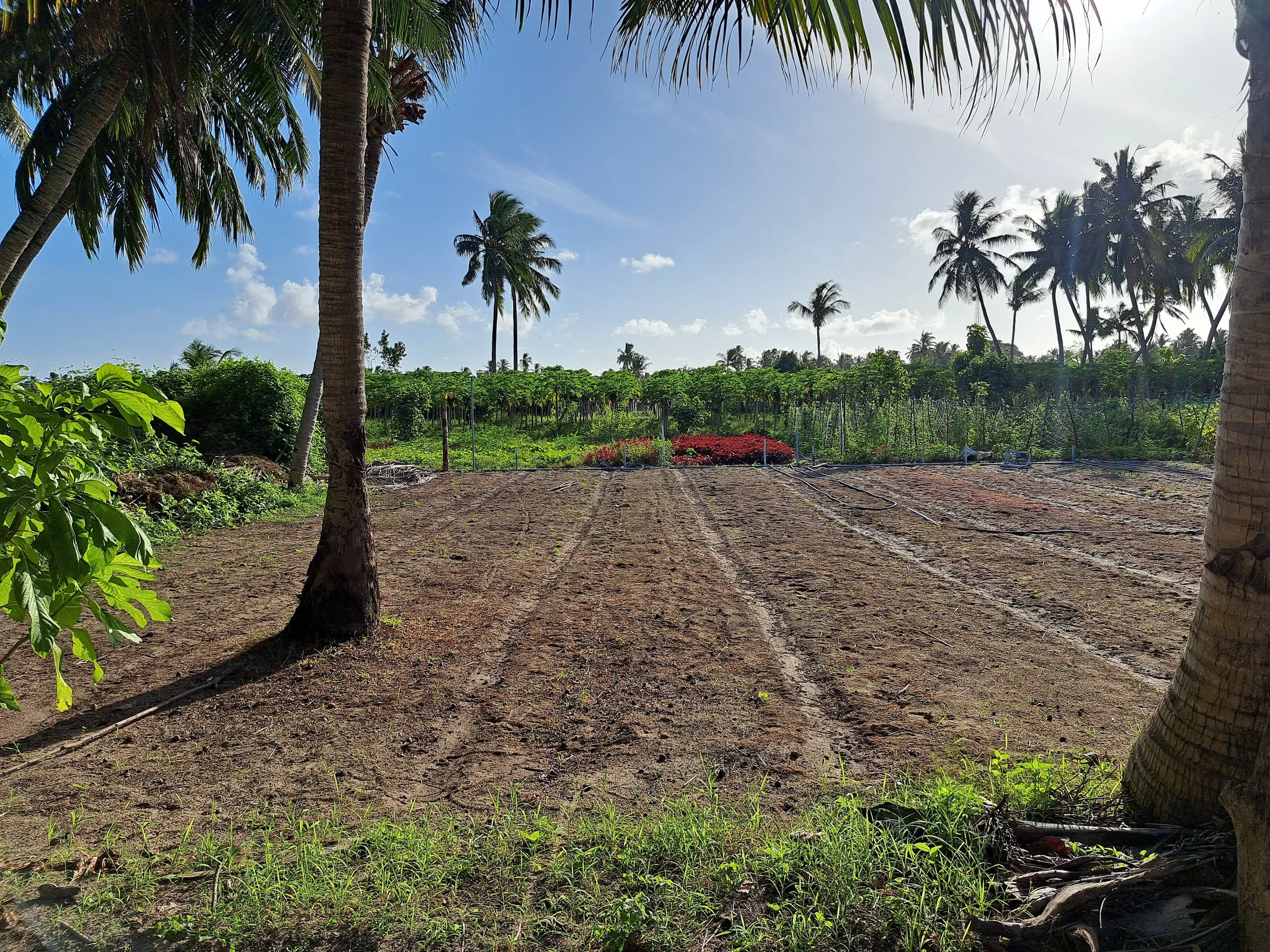
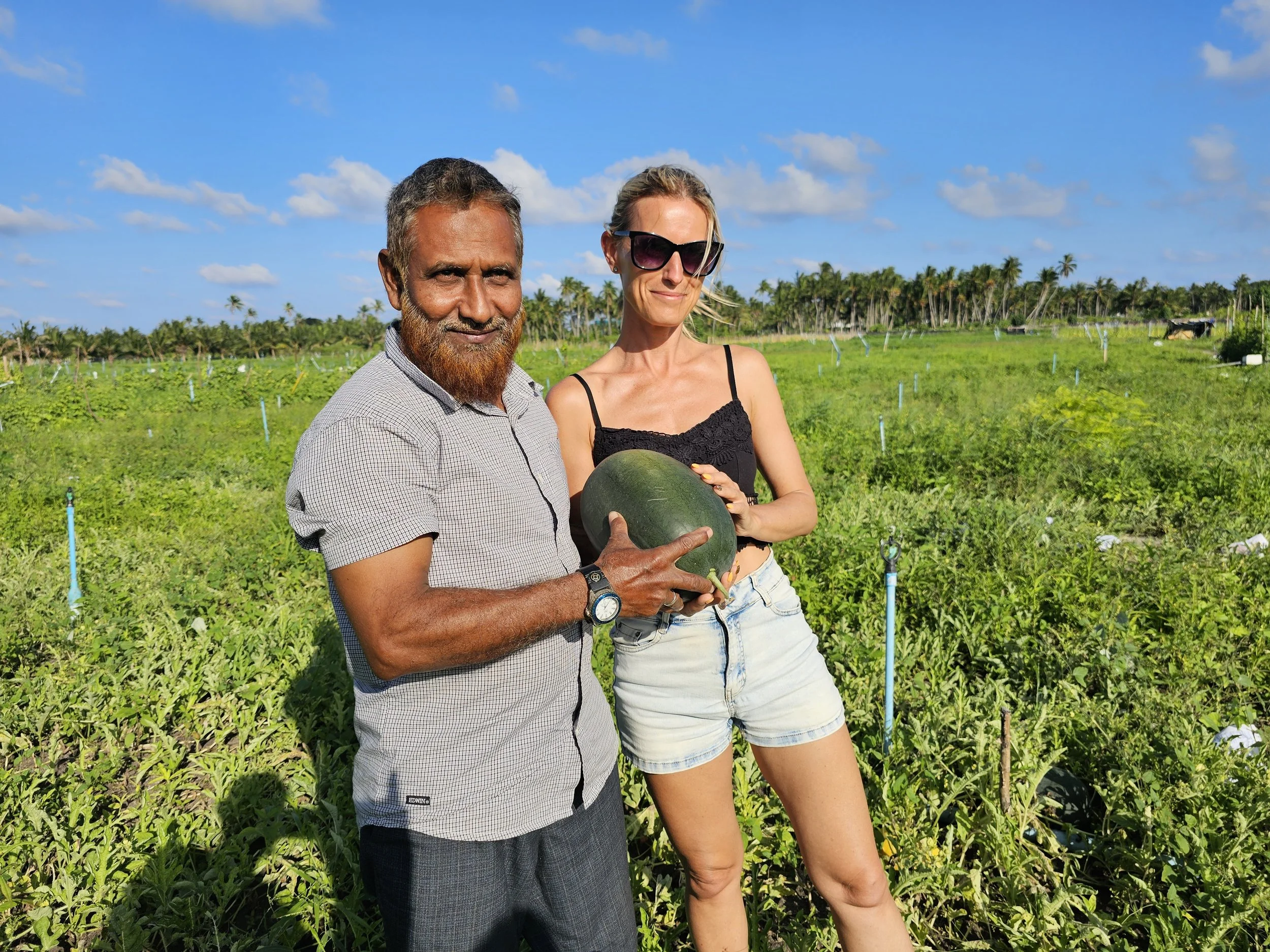
Thoddoo Island is located 67 km west of the capital, Malé, and 20 km north of Rasdhoo Island, the administrative centre of North Ari Atoll. Relatively large by Maldivian standards, the island measures approximately 2 km by 1 km and, unlike many other local islands, is geographically separated from the main archipelago. Around one-third of Thoddoo is dedicated to agriculture, another third is occupied by the local community of approximately 1,800 residents, while the remaining area is covered in lush tropical vegetation. Thoddoo is also one of the country's leading agricultural producers, particularly renowned for its exceptionally large and sweet watermelons. This has earned the island its affectionate nicknames, 'The Fruit Island' and 'The Island of Watermelons'.
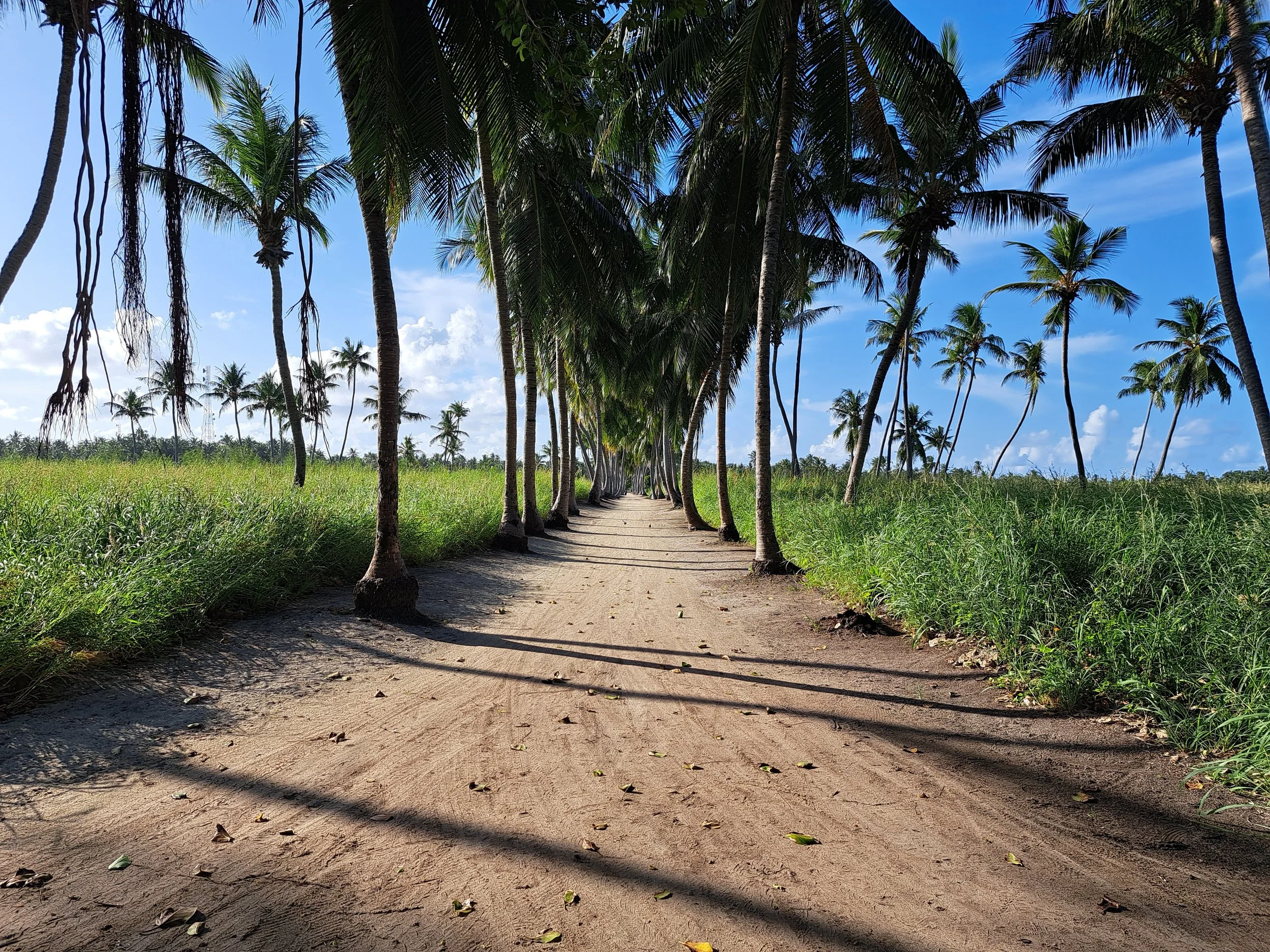
Given its considerable size, exploring Thoddoo entirely on foot can be quite challenging. One of the best ways to discover the island is by bicycle, particularly during the cooler morning or evening hours. Cycling offers visitors the opportunity to venture beyond the tourist beaches and experience the island's traditional way of life, agricultural landscapes and natural surroundings. Like many other local islands in the Maldives, Thoddoo has relatively limited wildlife diversity. However, its shores are home to numerous species of small crustaceans and fascinating hermit crabs, which ingeniously use discarded coconut shells, glass fragments and bottle caps as their portable homes. Thanks to its unique geographical location, Thoddoo also boasts beautiful beaches, with two of the island's most popular stretches of coastline situated at opposite ends.
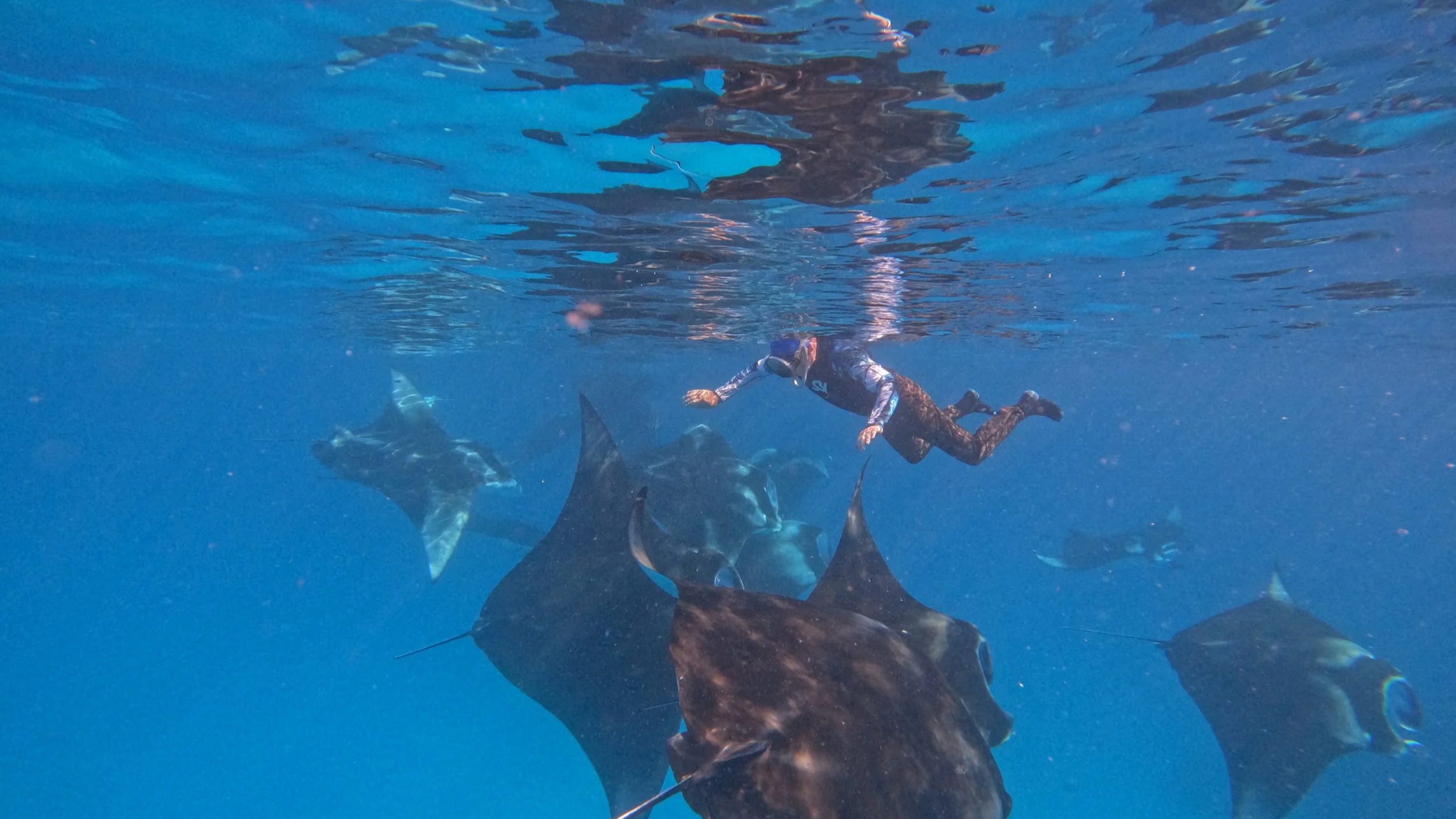
Thoddoo is also renowned for its considerable house reef, about 6 km in length, located in close proximity to the bikini beach. It is truly invigorating, consisting of giant eagle rays, reef manta rays & a plethora of spell-binding species of fish that’ll simply leave you speechless.
Southern Beach
The first beach is located on the southern side of the island, approximately 15 minutes by bicycle from the nearest hotels when taking the scenic route through the fruit farms. Shams Thoddoo provides guests with sturdy bicycles, making the journey both convenient and enjoyable.
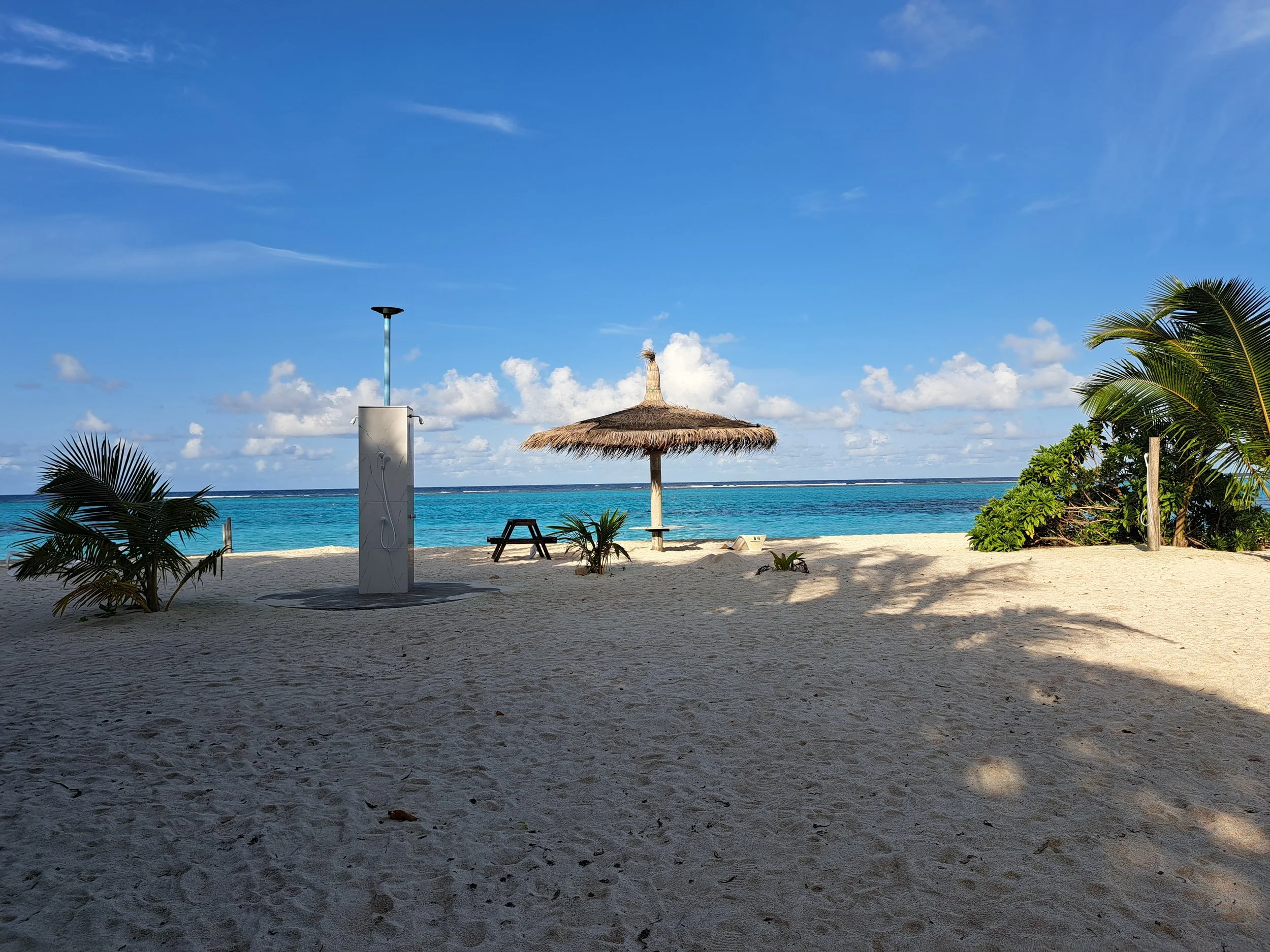
The beach is traditionally bordered by a fence made from dried palm leaves. Although relatively modest in size, it is clean and well-maintained, making it a popular spot among visitors. During peak tourist seasons, however, it can become quite busy. While conventional sun loungers and hammocks are not available, the beach is conveniently equipped with showers and toilet facilities.
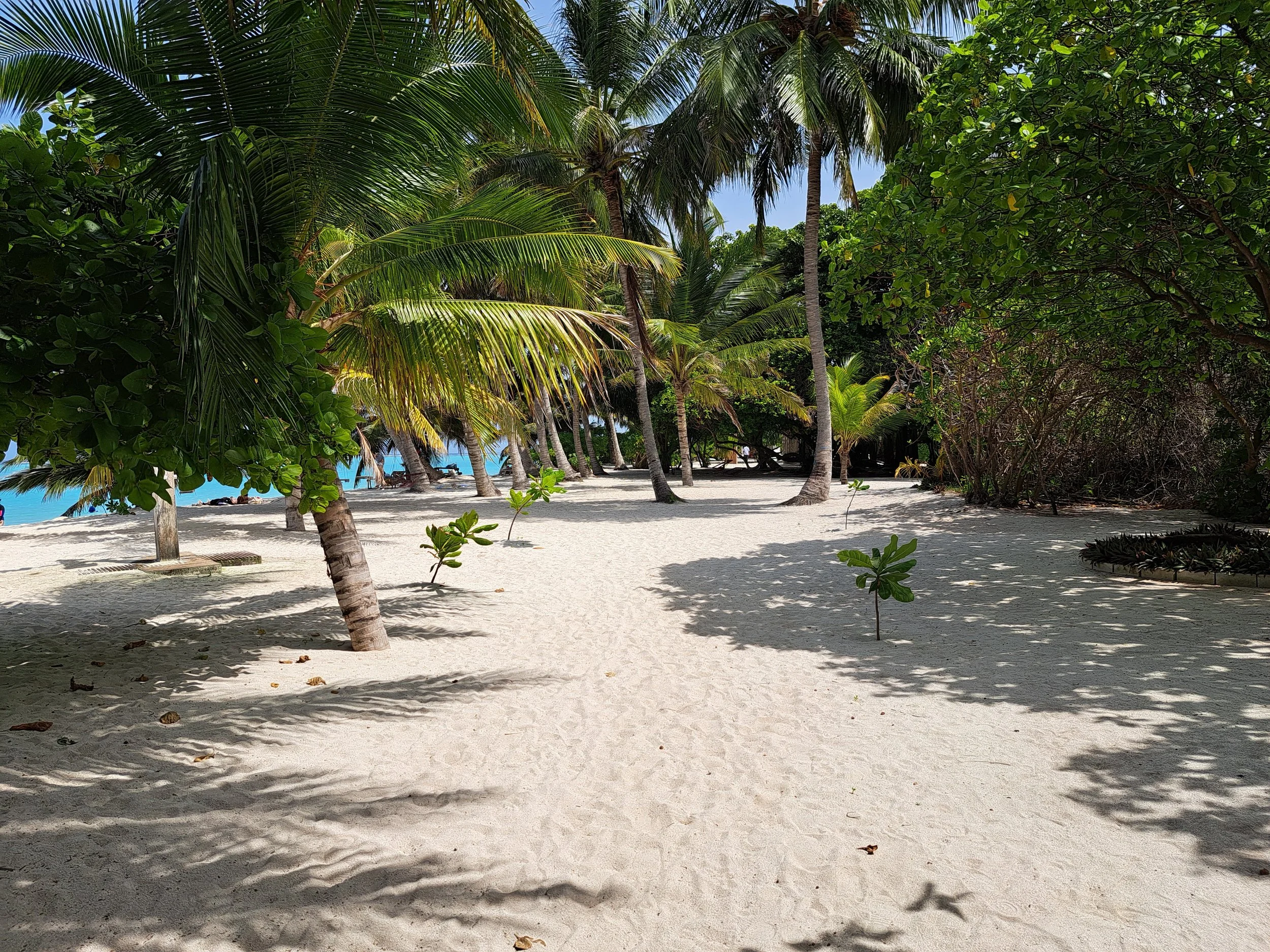
Lined with tropical greenery, the coastline features several shaded pathways leading directly to the water. Its soft, silvery-white sand reflects the sunlight beautifully and is pleasant to walk on, without the usual concern of encountering broken glass or sharp pieces of dead coral. The surrounding ocean is remarkably clear and pristine, with very little floating debris, creating an inviting setting for a relaxing day by the sea.
North-Eastern Beach
The second beach is situated on the north-eastern side of the island, just behind the local stadium. Depending on the location of your hotel, it can be reached in as little as five minutes on foot. Although smaller than the southern beach, it generally attracts fewer visitors, offering a quieter and more peaceful atmosphere.
Unlike the southern beach, this stretch of coastline is equipped with sun loungers and hammocks, allowing guests to relax and enjoy the surrounding scenery. However, its greatest attraction is its proximity to the island's house reef, located approximately 200 metres offshore.
The nearby reef is home to an impressive variety of marine life, including sea turtles, eagle rays, reef manta rays, colourful tropical fish and several species of sharks. Its proximity makes the beach an excellent starting point for guests interested in discovering the underwater beauty of Thoddoo and experiencing the Maldives' remarkable marine biodiversity..